
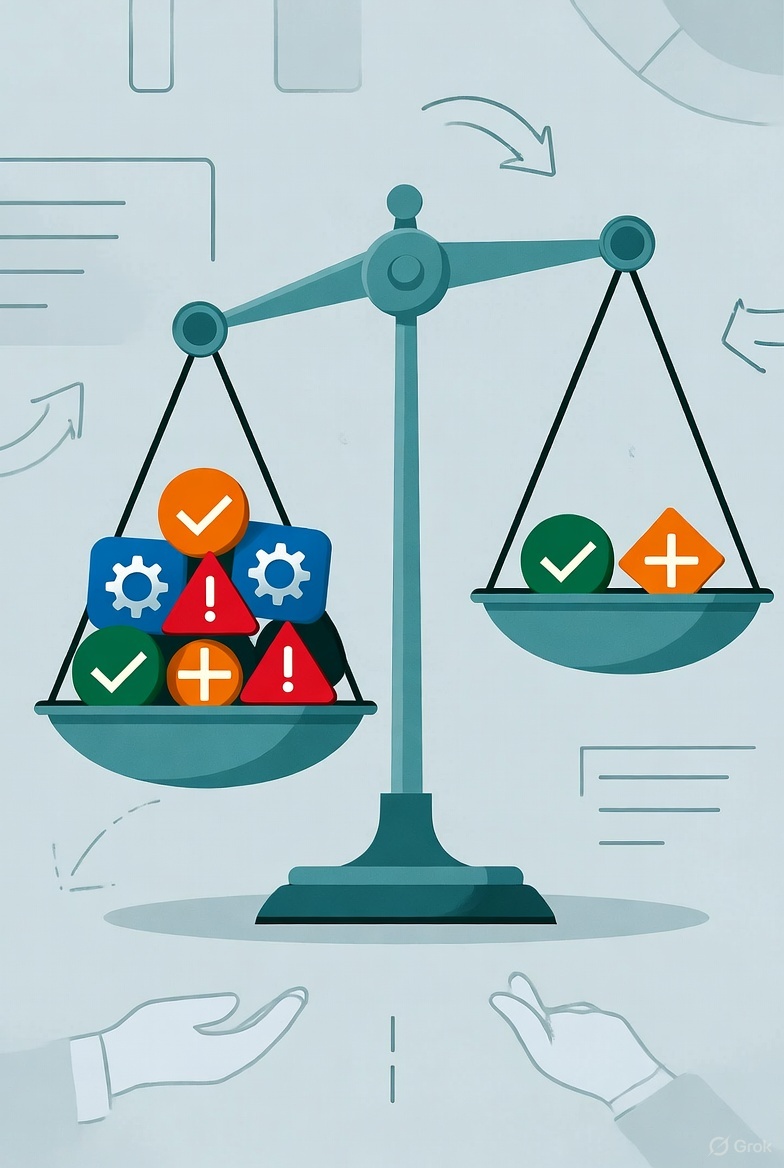
I once worked with a service team where we assumed the workload was spread evenly. But when we actually measured it, one person was carrying almost double the number of assignments. She wasn’t complaining, but she was making more mistakes and working late every night.
We built a simple dashboard of open tasks per person. Within a week, the imbalance was clear — and so were the consequences. By redistributing work, her stress level dropped, errors decreased, and overall cycle time improved. The team didn’t just feel better — it performed better.
That experience reminded me that organizing work is not just about getting tasks done. It’s about creating flow. Balanced workloads mean fewer errors, steadier performance, and healthier people.
Two Simple Practices to Start Today:
- Put Workload on the Table. In your next team meeting, list out the key tasks or projects currently in motion and who owns them. As a group, ask: Is this balanced? If one person is carrying more than their share, redistribute at least one task before the meeting ends. Don’t just talk about balance — act on it.
- Measure What Matters. Agree on one way to track workload as a team — hours logged, open cases, projects in play, or tickets closed. Make it visible on a shared board or dashboard so everyone can see the flow. Use this data to guide conversations and keep distribution fair.